


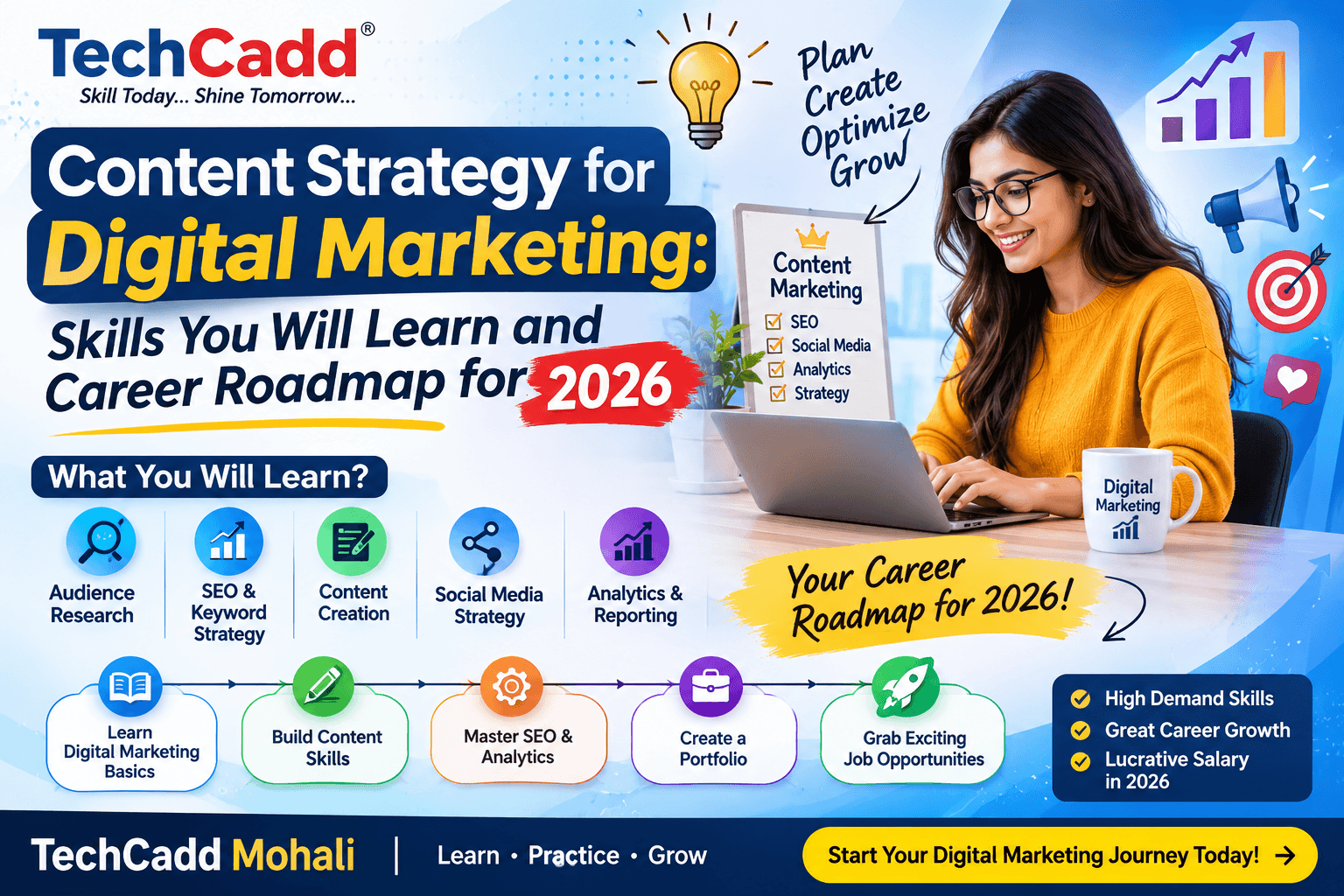
Content Strategy for Digital Marketing: Skills You Will Learn and Career Roadmap for 2026
Content plays an important role in digital marketing. Businesses use blogs, social media posts, videos, email campaigns and website content to communicate with their audiences, build trust and support business goals. However, publishing content regularly is not enough. Successful digital marketing requires a clear content strategy that connects audience needs with business objectives.
In 2026, content professionals need a combination of creativity, research, SEO knowledge, communication skills and data analysis. Whether you are a student, beginner or working professional, learning content strategy can help you understand how digital campaigns are planned, created, distributed and improved.
This guide explains the important content strategy skills, tools, practical projects and career opportunities you can explore while building a career in digital marketing.
What Is Content Strategy in Digital Marketing?
Content strategy is the process of planning, creating, organizing, publishing and evaluating content to achieve specific marketing objectives. It helps businesses deliver relevant information to the right audience through suitable digital channels.
A content strategy generally considers:
Target audience: Understanding who the content is intended for.
Business objectives: Defining whether content should build awareness, generate leads, educate customers or support conversions.
Content formats: Selecting blogs, videos, infographics, social posts, newsletters and other formats.
Distribution channels: Choosing websites, search engines, social media platforms and email.
Performance measurement: Tracking engagement, traffic, leads and other relevant results.
Why Is Content Strategy Important in 2026?
Digital audiences encounter large amounts of information every day. A structured content strategy helps brands create useful, consistent and audience-focused communication instead of publishing disconnected promotional messages.
1. Builds Brand Awareness
Consistent and relevant content helps audiences discover a business, understand its services and become familiar with its brand identity.
2. Supports Search Engine Visibility
Well-researched content that addresses user search intent can support organic search visibility. SEO practices such as keyword research, useful headings, internal linking and clear page structure help make content easier to discover and understand.
3. Builds Audience Trust
Educational articles, tutorials, case studies and informative videos can demonstrate subject knowledge and help audiences make informed decisions.
4. Supports Lead Generation
Useful content can guide potential customers towards relevant resources, newsletter subscriptions, enquiries or product information.
5. Improves Marketing Decisions
Performance data helps marketers identify which topics and formats are useful to their audiences and where content needs improvement.
Essential Skills You Will Learn in Content Strategy
1. Audience Research
Understanding the target audience is the starting point of an effective content plan. Marketers need to identify audience interests, questions, challenges and information needs.
Create basic audience personas.
Research customer questions and search behaviour.
Understand the customer journey.
Identify relevant audience segments.
Use feedback and engagement data to improve content.
2. Keyword Research and SEO
SEO helps content reach people who are searching for relevant information. Keyword research helps marketers understand the language audiences use when searching online.
Find relevant primary and secondary keywords.
Understand search intent.
Organize keywords by topic and relevance.
Write useful SEO titles and meta descriptions.
Use headings, internal links and descriptive URLs.
Understand basic on-page SEO and content optimization.
3. Content Planning and Calendar Management
A content calendar helps marketers organize publishing activities and maintain consistency across channels.
Plan weekly and monthly content themes.
Map content to campaign objectives.
Assign publishing dates and responsibilities.
Coordinate blogs, videos and social media posts.
Review and update older content.
4. Content Writing and Storytelling
Clear writing helps communicate ideas effectively. Content professionals should be able to adapt their writing style to different audiences and platforms.
Write blog articles and website pages.
Create engaging headlines and introductions.
Develop social media captions.
Use storytelling to explain ideas.
Edit content for clarity, accuracy and readability.
Understand responsible use of AI writing tools and fact-check generated content.
5. Social Media Content Strategy
Different social media platforms have different audiences and content formats. Marketers should understand how to adapt messages to each platform rather than simply reposting identical content everywhere.
Plan platform-specific content.
Create captions and creative briefs.
Understand short-form video formats.
Maintain brand tone and visual consistency.
Monitor comments, shares and audience engagement.
6. Visual Content and Basic Design
Visual communication helps make digital content easier to understand and more engaging. Basic design knowledge is useful for creating social media graphics, presentations and infographics.
Understand visual hierarchy and typography.
Create simple social media creatives.
Use suitable images and graphics.
Maintain consistent brand colours and layouts.
Prepare visual briefs for designers.
7. Analytics and Performance Measurement
Content performance should be measured against the objectives of each campaign. Analytics helps marketers understand what is working and what needs improvement.
Track website traffic and content engagement.
Understand impressions, clicks and click-through rates.
Monitor conversions and lead generation.
Compare performance across content formats.
Prepare reports and recommend improvements.
Important Tools for Content Strategy
Digital marketers use different tools to research topics, manage publishing workflows, create content and measure campaign performance. The tools required depend on the organization and the type of content being produced.
Google Analytics 4: Understand website traffic and user interactions.
Google Search Console: Review search performance and website indexing information.
Google Trends: Explore changes in search interest over time.
Google Keyword Planner: Research keyword ideas and search advertising information.
Canva: Create basic visual content and social media graphics.
WordPress: Manage and publish website content.
Social media management tools: Organize publishing schedules and review engagement.
Spreadsheets: Maintain content calendars, keyword lists and performance reports.
Career Roadmap for Content Strategy in 2026
Building a career in content strategy requires a combination of learning, practice and portfolio development. The following roadmap provides a practical sequence for beginners.
Step 1: Understand Digital Marketing Fundamentals
Start by learning the major areas of digital marketing, including SEO, social media marketing, content marketing, email marketing and paid advertising. Understand how these channels support business goals.
Step 2: Develop Writing and Research Skills
Practise writing blog posts, website descriptions, social media captions and email content. Learn to research reliable information and adapt your writing to the needs of different audiences.
Step 3: Learn SEO and Keyword Research
Explore search intent, keyword selection, on-page SEO, content structure and internal linking. Practise optimizing sample articles for relevant search queries.
Step 4: Create a Content Calendar
Choose a sample business or topic and prepare a monthly content calendar. Include content topics, target audiences, formats, keywords, publishing dates and campaign objectives.
Step 5: Practise with Realistic Projects
Develop sample blog articles, social media campaigns, email newsletters and visual content. Focus on solving a specific audience problem rather than simply producing a large number of posts.
Step 6: Learn Analytics
Understand how to evaluate website traffic, engagement, search performance and conversions. Practise preparing simple reports and suggesting improvements based on the data.
Step 7: Build a Professional Portfolio
Collect your best projects in a portfolio. Include writing samples, keyword research, content calendars, social media creatives and campaign reports. Explain the objective and approach behind each project.
Step 8: Apply for Entry-Level Roles
Prepare a resume that highlights your skills and practical work. Explore internships and entry-level opportunities to gain professional experience and learn how marketing teams operate.
Career Opportunities After Learning Content Strategy
Content strategy skills can support several digital marketing roles. The responsibilities may vary according to company size, industry and experience level.
1. Content Writer
Creates articles, website content, product descriptions and other written materials for digital channels.
2. SEO Content Executive
Researches keywords, optimizes website content and supports organic search visibility.
3. Social Media Executive
Plans and publishes social media content, coordinates campaigns and monitors audience engagement.
4. Content Marketing Executive
Supports content campaigns, editorial calendars, audience research and performance reporting.
5. Digital Marketing Executive
Works across different digital channels and assists with campaign planning, content publishing and marketing analysis.
6. Content Strategist
Plans content themes, audience journeys, editorial priorities and content performance improvements. More advanced positions often require practical experience and strategic skills.
Practical Projects to Add to Your Portfolio
Practical assignments can help demonstrate your ability to plan and execute content marketing activities.
30-day content calendar: Create a month-long publishing plan for a business or educational brand.
SEO blog project: Research keywords and write an optimized article around a specific topic.
Social media campaign: Develop a series of posts with a consistent message and campaign objective.
Email newsletter: Create an informative newsletter for a defined audience.
Content performance report: Prepare a sample report explaining traffic, engagement and possible improvements.
Content audit: Review existing website pages and recommend updates based on relevance, quality and search intent.
How to Choose Digital Marketing Training in Mohali
Learners exploring content strategy training in Mohali should compare institutes based on the quality of their curriculum and practical learning opportunities.
Check whether the syllabus includes content marketing and SEO.
Ask about keyword research and content planning exercises.
Review whether social media and analytics are included.
Look for practical assignments and portfolio-building activities.
Understand trainer experience and doubt-clearing support.
Ask for clear information about course duration, fees and placement assistance.
TechCadd Mohali is one option learners can explore when comparing digital marketing training opportunities. Review the current course syllabus and training details directly before deciding whether the program matches your goals.
Frequently Asked Questions
1. What is content strategy in digital marketing?
Content strategy is the planning and management of content to meet audience needs and business objectives across digital channels.
2. What skills are required for content strategy?
Important skills include audience research, writing, SEO, keyword research, content planning, social media, communication and analytics.
3. Is content strategy a good career option in 2026?
Content strategy can be a useful career path for people interested in digital communication, marketing and audience research. Opportunities depend on practical skills, experience and employer requirements.
4. Do I need coding skills to work in content strategy?
Most entry-level content strategy roles do not require advanced coding. Basic website and CMS knowledge can be helpful.
5. Can beginners learn content marketing?
Yes. Beginners can start with digital marketing fundamentals, writing practice, SEO basics and small portfolio projects.
6. What projects should I complete before applying for jobs?
Build a content calendar, write SEO articles, prepare social media campaigns and create sample analytics reports to demonstrate your practical skills.
Conclusion
Content strategy is an important part of digital marketing because it connects audience needs with business objectives. In 2026, learners can strengthen their career preparation by developing skills in writing, SEO, audience research, social media, content planning and analytics.
Follow a structured learning roadmap, practise with realistic projects and build a portfolio that demonstrates your abilities. If you are exploring digital marketing training in Mohali, compare course syllabuses and practical learning opportunities carefully before enrolling.
With consistent learning and hands-on experience, you can prepare to explore opportunities in content writing, SEO content marketing, social media and broader digital marketing roles.
Want this mapped to your own background and goals?
Talk to a counsellorMore on the blog
How to Prepare a Project Report & Viva for 6 Months College Industrial Training
Learn how to prepare a professional project report and confidently face your viva after six months of college industrial training. Explore report structure, documentation tips, project presentation, common viva questions and preparation strategies.
Top 9 High-Paying Tech & Engineering Courses for 6 Months Internship in 2026
Explore 9 high-paying technology and engineering courses for a six-month internship in 2026. Compare essential skills, tools, practical projects and career opportunities to choose the right training path.

Comments
No comments yet — yours would be the first.